


 русский
 فارسی
 العربية
 English
 Dairy Powder
 Creamer
 Butter
 Cream
 Milk
 Cheese
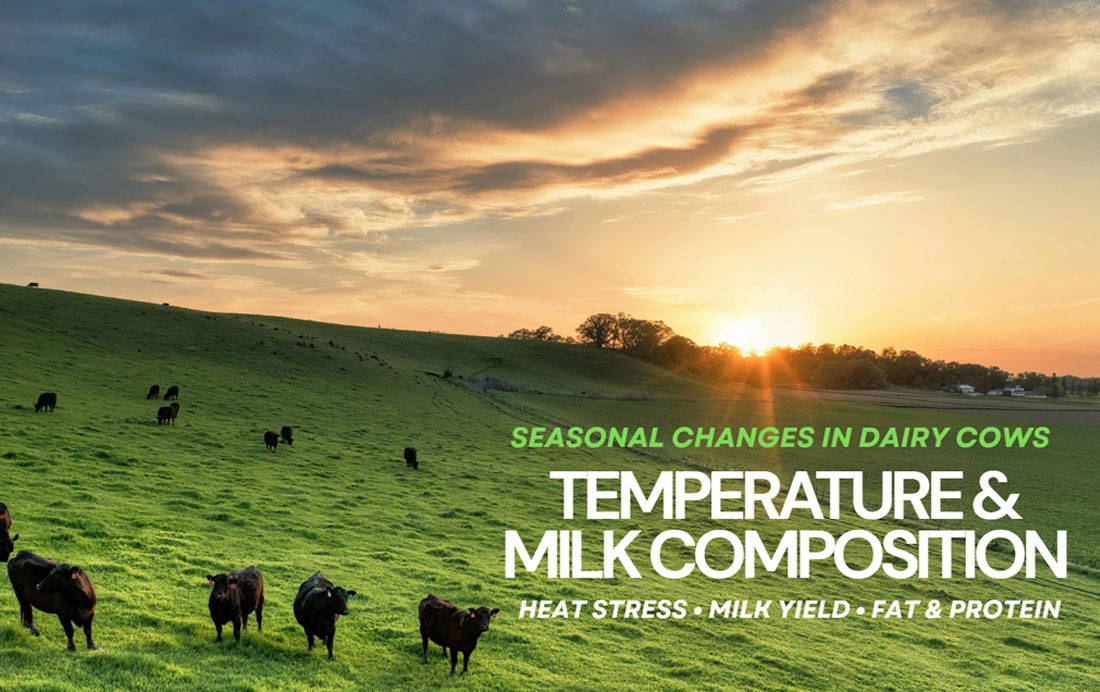
Seasonal and Temperature-Related Changes in Milk Production and Composition in Holstein Cows
This article explores how seasonal temperature changes and heat stress affect milk production and composition in Holstein cows, including milk fat, protein, and lactose. It also examines the factors influencing these changes and practical strategies for managing their effects on dairy production.
Milk production and composition are influenced by several factors, including environmental temperature, humidity, feed intake, diet, stage of lactation, cow health, and herd management. In Holstein cows, which are widely used in commercial dairy production, heat stress can affect both milk yield and certain milk components. Understanding these effects helps dairy producers, milk processors, and dairy ingredient manufacturers interpret variations in raw milk quality and production performance.
However, seasonal changes should not be interpreted as a fixed pattern that occurs in every herd. The magnitude and direction of changes can differ according to local climate, feeding practices, animal characteristics, and management conditions.
1. How Temperature and Seasonal Conditions Affect Dairy Cows
Dairy cows require suitable environmental conditions to maintain body temperature, feed intake, and milk production. When environmental heat load exceeds their ability to dissipate heat, cows may experience heat stress. This condition can affect physiological functions, feeding behavior, and productive performance.
Temperature alone does not fully describe the environmental heat load experienced by a cow. Relative humidity, air movement, solar radiation, shade, housing design, and access to cooling can also influence how effectively an animal loses heat.
1.1. Heat Stress and Feed Intake
One of the common responses to heat stress is a reduction in feed intake. Cows may consume less dry matter when exposed to high heat loads, reducing the nutrients available to support milk synthesis.
A 2024 meta-analysis by Chen and colleagues, which evaluated 31 studies comprising 34 trials, found that heat stress reduced dry matter intake and energy-corrected milk production. The analysis also identified an association between increasing temperature-humidity index (THI) and reductions in these outcomes. The magnitude of the response varied with factors including the stage of lactation.
Reduced feed intake is not the only possible explanation for changes in milk production under heat stress. Heat exposure can also alter the cow's metabolism and nutrient utilization. The relative contribution of these factors may differ among animals and production systems.
1.2. Understanding the Temperature-Humidity Index (THI)
The temperature-humidity index combines air temperature and relative humidity to estimate environmental heat load. It is widely used in dairy research and herd management to help identify conditions associated with heat stress.
A THI value around 68 is often discussed as an early warning point for high-producing dairy cows. However, this value should not be treated as a universal threshold. Published studies use different thresholds depending on the THI formula, breed, production level, climate, acclimatization, and other conditions. Heat-stress responses can also depend on how long cows are exposed to elevated temperatures and whether they have access to effective cooling.
For this reason, THI is best interpreted alongside other information, such as changes in feed intake, milk yield, respiration rate, and animal behavior, rather than as the sole indicator of heat stress.
2. Effects of Heat Stress on Milk Yield
Milk yield is one of the production parameters that can be affected by heat stress. When cows experience excessive heat, reduced feed intake and changes in nutrient metabolism can limit the resources available for milk synthesis. The energy and nutrients required for maintenance and temperature regulation may also influence how the cow allocates available resources.
The meta-analysis by Chen et al. (2024) found a reduction in energy-corrected milk production under heat stress. Nevertheless, the size of the reduction was not identical across the studies included in the analysis. Lactation stage and the conditions under which heat stress occurred contributed to variation in the observed responses.
Milk yield is also influenced by factors unrelated to temperature, including days in milk, parity, genetics, disease, milking frequency, ration formulation, and feed availability. Consequently, a decline in milk production during a warm period should not automatically be attributed to heat stress without considering these other factors.
2.1. Why Seasonal Milk Production Can Differ
Seasonal differences in milk production may reflect several interacting influences. During warmer periods, heat load can reduce intake and alter physiological processes. Seasonal changes in forage quality, ration ingredients, feed storage, water availability, and farm management may also affect production.
The relative importance of these factors differs between farms and regions. Therefore, the seasonal pattern observed in one dairy herd cannot necessarily be applied to all Holstein herds.
Comparing milk yield with daily temperature, humidity, THI, feed intake, and lactation records can help producers identify whether heat exposure is likely to be contributing to a change in production.
3. Effects of Temperature on Milk Composition
Milk composition is commonly assessed through parameters such as fat, protein, lactose, total solids, and solids-not-fat. These components are influenced by animal physiology, nutrition, genetics, lactation stage, and environmental conditions.
Heat stress can affect some milk components, but the response is not uniform across all components or studies. It is therefore important to distinguish between changes in the concentration of a component and changes in the total amount produced per cow. For dairy manufacturers looking for industrial milk-based products, explore ChaltaFarm’s dairy ingredients and products.
3.1. Milk Fat
Milk fat is an important component of raw milk because it contributes to the nutritional properties, energy content, and processing characteristics of dairy products. Its concentration is influenced by dietary composition, rumen fermentation, the availability of nutrients for fat synthesis, and the cow's physiological condition.
Heat stress may affect these processes indirectly through changes in feed intake and nutrient metabolism. However, research does not establish that milk fat concentration always decreases during hot weather.
In the 2024 meta-analysis by Chen et al., heat stress reduced dry matter intake, energy-corrected milk production, and milk protein concentration, but did not significantly change overall milk fat concentration. Other research has reported different responses under particular experimental or farm conditions.
These findings indicate that the effect of heat stress on milk fat can vary with the animals studied, their diets, the severity and duration of heat exposure, and other management factors. A decrease in milk fat should therefore not be assumed solely because temperatures have risen.
For dairy processors, regular analysis of milk fat is more reliable than predicting fat concentration from season alone.
3.2. Milk Protein
Milk protein is another important parameter for dairy processing and ingredient production. Its concentration can be influenced by protein and energy intake, rumen function, amino acid availability, lactation stage, and the overall metabolic condition of the cow.
Heat stress may affect milk protein through reduced feed intake and changes in nutrient metabolism. In the meta-analysis by Chen et al. (2024), milk protein concentration decreased under heat stress. However, the magnitude of this response can differ between studies and production systems.
The protein concentration measured in milk should also be distinguished from total daily protein yield. When milk volume changes, the total amount of protein produced per cow may change even if the protein percentage changes only slightly, or remains relatively stable.
Monitoring both milk yield and protein concentration can therefore provide a more complete picture of production performance.
3.3. Lactose
Lactose is the principal carbohydrate in bovine milk and plays an important role in regulating milk volume. Its synthesis is linked to mammary gland metabolism and the availability of glucose and related metabolic substrates.
Heat stress may affect lactose concentration under certain conditions, but the evidence does not support assuming the same response in every herd. Differences in heat exposure, lactation stage, nutrition, and experimental design can contribute to variation among studies.
A controlled study published in 2024 reported lower milk protein and lactose under the heat-stress conditions examined. Such findings provide evidence that lactose can be affected by heat stress, but they should not be generalized to every farm or climatic situation.
For this reason, lactose should be evaluated using actual milk analysis rather than estimated from temperature or season alone.
3.4. Total Solids and Solids-Not-Fat
Total solids comprise the components of milk remaining after water is removed, including fat, protein, lactose, and minerals. Solids-not-fat refers to the non-fat portion of these milk solids.
Changes in individual components can influence total solids and solids-not-fat, but the overall response depends on how each component changes. If milk fat remains stable while protein or lactose changes, the resulting total-solids pattern may differ from a situation in which several components change simultaneously.
Seasonal comparisons of these parameters should therefore be based on laboratory measurements and interpreted alongside milk yield, feeding conditions, and lactation records. A single seasonal trend should not be assumed to apply universally.
4. Why Seasonal Patterns Differ Between Dairy Herds
Although temperature is an important environmental factor, it is only one part of a broader production system. Several factors can help explain why seasonal changes in milk yield and composition differ among herds.
4.1. Diet and Nutrient Availability
The composition, digestibility, and availability of feed influence milk production and the synthesis of milk components. Changes in forage quality, ration formulation, dry matter intake, and nutrient balance can affect the cow's response to environmental heat.
When heat stress reduces intake, the amount of energy, protein, and other nutrients consumed may also decline. Appropriate ration management can help maintain nutrient intake, but adjustments should be made according to the herd's needs and under suitable professional guidance.
4.2. Stage of Lactation and Cow Characteristics
Milk yield and composition naturally change during lactation. Early-, mid-, and late-lactation cows may respond differently to environmental conditions because their physiological and production demands differ.
Parity, genetics, body condition, health status, and individual heat tolerance may also contribute to variation. These factors are among the reasons why results from one study or herd may not fully represent another.
4.3. Housing and Cooling Management
Shade, ventilation, air movement, access to clean drinking water, and appropriately designed cooling systems can influence the heat load experienced by dairy cows. Fans and water-based cooling methods may be useful in suitable housing systems, depending on humidity, airflow, installation, and management.
The effectiveness of these measures depends on local conditions and how they are implemented. Monitoring animal behavior and production records can help evaluate whether cooling and management practices are meeting the needs of the herd.
5. Practical Strategies for Managing Seasonal Variation
Dairy producers can use several monitoring and management practices to reduce the risk of heat-related production losses and better understand seasonal changes.
5.1. Monitor Environmental Conditions and Animal Responses
Recording temperature, relative humidity, and THI can help identify periods of elevated environmental heat load. These measurements should be considered alongside feed intake, milk yield, respiration rate, and observed behavior.
Because a single THI threshold is not suitable for every production system, farm decisions should account for local conditions and the characteristics of the herd.
5.2. Maintain Access to Water and Suitable Cooling
Reliable access to clean drinking water is essential, particularly during hot weather when water requirements may increase. Shade, ventilation, and appropriate cooling measures can help cows dissipate heat.
Cooling systems should be selected and operated according to the farm's housing design, climate, water availability, and management capacity.
5.3. Review Feed Intake and Ration Management
Monitoring dry matter intake and feed availability can help producers identify changes associated with hot weather. Ration management should aim to maintain adequate nutrient intake while considering the effects of heat on feeding behavior and the nutritional requirements of the herd.
Changes to the ration should be evaluated carefully, rather than assuming that one dietary adjustment will produce the same response under all conditions.
5.4. Analyze Milk Components Regularly
Routine testing of milk fat, protein, lactose, and other relevant quality parameters can reveal changes that may not be apparent from milk volume alone. Comparing results across seasons, while accounting for lactation stage, diet, and management, can help identify recurring patterns.
For processors and dairy ingredient manufacturers, this type of monitoring can also support a more accurate understanding of variation in incoming raw milk. Actual analytical data should remain the basis for evaluating milk composition and suitability for specific processing applications.
Conclusion
Temperature and seasonal conditions can influence milk production and composition in Holstein cows, particularly when environmental heat load causes heat stress. Scientific evidence supports an association between heat stress, reduced feed intake, and lower milk production. Research also indicates that milk protein concentration may decrease, while the effects on milk fat and lactose can vary between studies and production systems.
These responses are not universal. Climate, humidity, diet, stage of lactation, cow characteristics, and farm management can all influence the outcome. THI can be a useful monitoring tool, but no single threshold should be treated as appropriate for every herd.
For dairy producers and processors, the most reliable approach is to combine environmental monitoring, suitable heat-management practices, feed-intake records, and regular milk-component analysis. This makes it possible to assess seasonal variation using measured data rather than assuming that milk yield or composition will follow the same pattern in every production system.
Related Blogs


.jpg)