
.svg)
.svg)
.svg)
.svg)
.svg)
 русский
 فارسی
فارسی العربية
 English
 Dairy Powder
  Creamer
  Butter
  Cream
Cream  Milk
Milk  Cheese
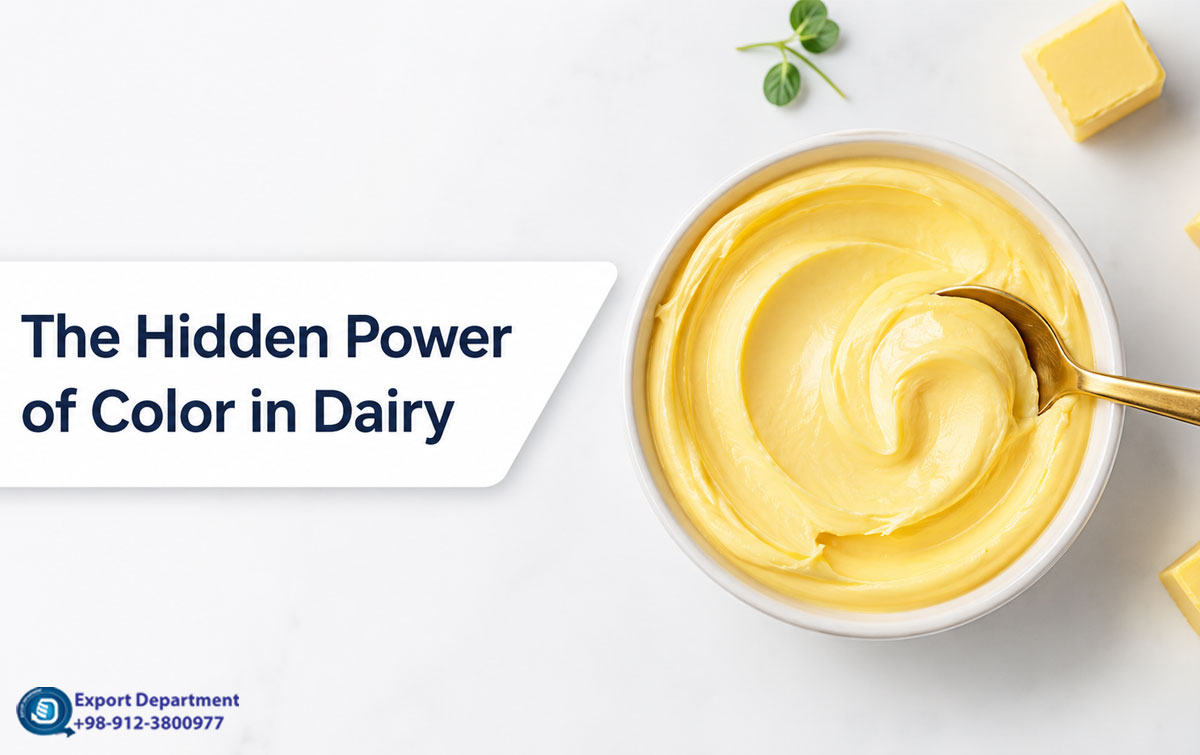
 Why Does Golden Butter Look More Expensive? The Surprising Power of Color in Dairy
Color is more than just appearance in dairy—it can influence how consumers perceive taste, quality, freshness, and value. Discover how natural and carefully selected colors can shape the appeal and premium positioning of dairy products.
When you look at a golden-yellow block of butter, a bright pink strawberry yogurt, or a deep orange cheese, you probably think you are simply looking at the product’s appearance.
But color can do much more than make dairy products look attractive.
Before consumers taste a product, they see it. That first visual impression can influence what they expect the product to taste like, how natural or rich they believe it is, and even how much they may be willing to pay for it.
In dairy, color is becoming an increasingly interesting tool for communicating quality, naturalness, indulgence, and product identity.
Why Does Color Matter So Much in Dairy?
Color is one of the first sensory signals consumers receive from a food product.
A creamy white yogurt may suggest freshness and naturalness. A rich golden butter may create expectations of richness and quality. A bright fruit-colored yogurt may make consumers anticipate a stronger fruit flavor.
This means that color can influence the experience before the first spoonful.
Research and industry experience have shown that changes in color intensity and hue can affect how consumers perceive food and beverages, including their expectations of flavor and quality.
For dairy brands, this creates an interesting opportunity: the color of a product can become part of its story.
Is Golden Butter Really Better?
Not necessarily.
But consumers may perceive it that way.
Butter naturally ranges from pale yellow to deeper golden shades. Its color can be influenced by factors such as the cow’s diet, particularly the presence of carotenoid-rich forage such as grass.
This creates an interesting connection between color, farming and perceived quality.
In markets where grass-fed dairy has a strong reputation, a deeper golden color can reinforce associations with pasture-based farming, natural production and richness.
Irish butter is a well-known example. Its intense yellow color has become closely associated with its origin and grass-fed credentials, helping reinforce perceptions of naturalness, richness, and quality.
So, does a more golden butter automatically mean better quality?
No.
But its color can influence what consumers expect from it.
And that distinction is important: color can communicate quality without necessarily being a direct measurement of quality.
Milk Isn't Always Just White
Milk is often described simply as white, but natural milk can have different shades.
For example, milk from Jersey cows can have a noticeably creamier or more ivory appearance, partly associated with its higher milk-fat content.
This creates another opportunity for dairy brands.
Instead of treating color as an insignificant characteristic, manufacturers can use descriptions such as:
- Naturally ivory
- Cream-tinted
- Golden
- Rich white
to communicate characteristics such as richness, tradition or provenance.
In other words, the color itself can become part of the product's identity.
When Color Becomes Part of the Product Story
Color does not have to be added artificially to become a marketing tool.
Sometimes, the most interesting story is the color that is already naturally present.
Consider a product positioned around:
Grass-fed milk → naturally richer color → traditional farming → premium positioning
The color becomes a visual shortcut that connects the product to its origin.
This approach can be particularly powerful in premium dairy, where consumers are often looking for signals of authenticity, provenance and naturalness.
Why Are Some Dairy Products So Colorful?
Not all dairy products rely on their natural color.
Flavored yogurts, desserts, ice creams and dairy beverages may use colors to create a stronger visual connection with their flavors.
A strawberry yogurt, for example, is expected to look pink or red.
A blueberry product may be expected to have purple or blue tones.
A mango dairy drink may be expected to have a yellow-orange appearance.
This is where color becomes part of flavor recognition.
The consumer sees the color and immediately forms an expectation about what the product will taste like.
Natural Colors Are Changing the Dairy Color Palette
As consumers pay more attention to ingredient labels and naturalness, manufacturers are increasingly interested in plant-based color solutions.
Natural colors can be obtained from sources such as fruits, vegetables and other plants.
For dairy manufacturers, the challenge is not simply finding a natural color. The color must also work under the conditions of the specific product.
Factors such as:
- pH
- heat treatment
- processing conditions
- storage
- light exposure
- shelf life
can all influence color performance.
This is why creating an attractive naturally colored dairy product can be more complicated than simply adding a colored ingredient.
The Rise of Bold Dairy Colors
The dairy industry is also exploring more creative color concepts.
A 2025 DairyReporter insight guide highlighted several directions in dairy product innovation, including bold colors, creative concepts, high-protein products, nostalgic flavors and convenient formats. The guide specifically explores how plant-based colors can be used to bring these concepts to life.
This represents a shift from the traditional idea that dairy products should always look white, cream or pale yellow.
Modern dairy products can use color to communicate:
Fun.
Indulgence.
Fruit flavor.
Premium quality.
Natural ingredients.
Innovation.
From Strawberry Pink to Golden Yellow
Different dairy categories can use color in completely different ways.
Yogurt
Color can help communicate the fruit or flavor inside the product.
Strawberry, raspberry, blueberry, mango and other fruit varieties can each have their own visual identity.
Butter
Golden shades can reinforce associations with richness, grass-fed farming and traditional dairy.
Cheese
Many hard cheeses naturally have relatively pale colors, while some products use natural coloring such as annatto to achieve stronger yellow or orange tones.
This can create a recognizable appearance and help differentiate products on the shelf.
Cream and Crème Fraîche
Even subtle differences in color can influence perceptions of richness and creaminess.
A warmer or more ivory appearance may make consumers expect a richer product.
Can Color Make a Dairy Product Look More Premium?
This is where color becomes particularly interesting for manufacturers.
Premiumisation is not only about adding expensive ingredients.
It is also about how consumers perceive value.
A product that communicates craftsmanship, naturalness, provenance and indulgence can be positioned differently from a standard product.
Color can contribute to that perception.
For example, describing butter as simply “yellow” is very different from communicating it as having a naturally golden hue associated with grass-fed milk.
The product may not have changed dramatically.
But the story around it has.
The Clean-Label Challenge
There is another reason natural color is attracting attention.
Consumers increasingly look for products with ingredients they recognize and understand.
This has encouraged manufacturers to explore alternatives to certain synthetic colors and to consider plant-based coloring solutions.
However, “natural” does not automatically mean “easy to formulate.”
Natural colors can behave differently depending on the food matrix and processing conditions, so manufacturers need to consider stability, dosage, processing and shelf life when developing a product.
Could the Color of Dairy Change What Consumers Are Willing to Pay?
This may be the most interesting question.
Consumers do not evaluate food based only on nutritional composition.
They also respond to visual signals.
A color can suggest:
- richness
- freshness
- naturalness
- fruit content
- quality
- tradition
- indulgence
These perceptions can influence purchasing decisions.
That does not mean a darker yellow butter is automatically better, or that a brighter yogurt contains more fruit.
It means that visual appearance can influence perceived value.
And for premium dairy brands, perceived value matters.
Read More: What Makes Butter Turn Yellow?
The Future of Color in Dairy
The next generation of dairy innovation may not only be about adding more protein, reducing sugar or improving nutrition.
It may also be about something much simpler:
How should the product look?
Manufacturers are exploring new ways to use color to communicate product identity, while natural and plant-based color solutions are creating more possibilities for yogurt, desserts, beverages and other dairy categories.
At the same time, naturally occurring colors can tell a powerful story about milk, farming systems, animal breeds and product origin.
The opportunity is therefore bigger than simply making dairy products more colorful.
It is about making color meaningful.
Final Thoughts
A golden butter, an ivory milk, a pink strawberry yogurt or a naturally colored cheese may look like simple visual details.
But behind those colors are questions about farming, ingredients, processing, consumer psychology, product positioning and perceived quality.
For dairy manufacturers, color can be more than decoration.
It can be a way to tell a story.
And sometimes, the difference between an ordinary-looking dairy product and a premium-looking one may begin with something consumers notice before they even take the first bite:
its color.
Related Blogs
.webp)
.jpg)